Shappay
A QR-driven payment resolution engine that picks the right financial rail — wallet, bank, or external network — from the merchant and user preferences.
Nigerian transfers still run on 10-digit account numbers read aloud, mistyped, and trapped inside individual banks. There is no shared way for a small merchant to be paid without giving out their account details.
What it actually does.
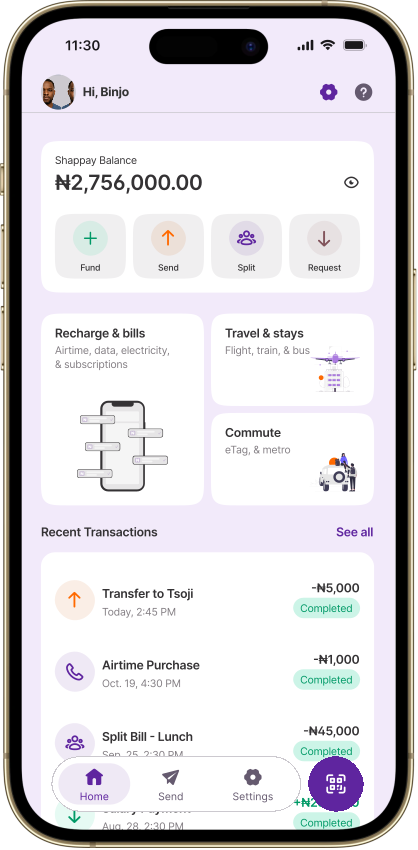
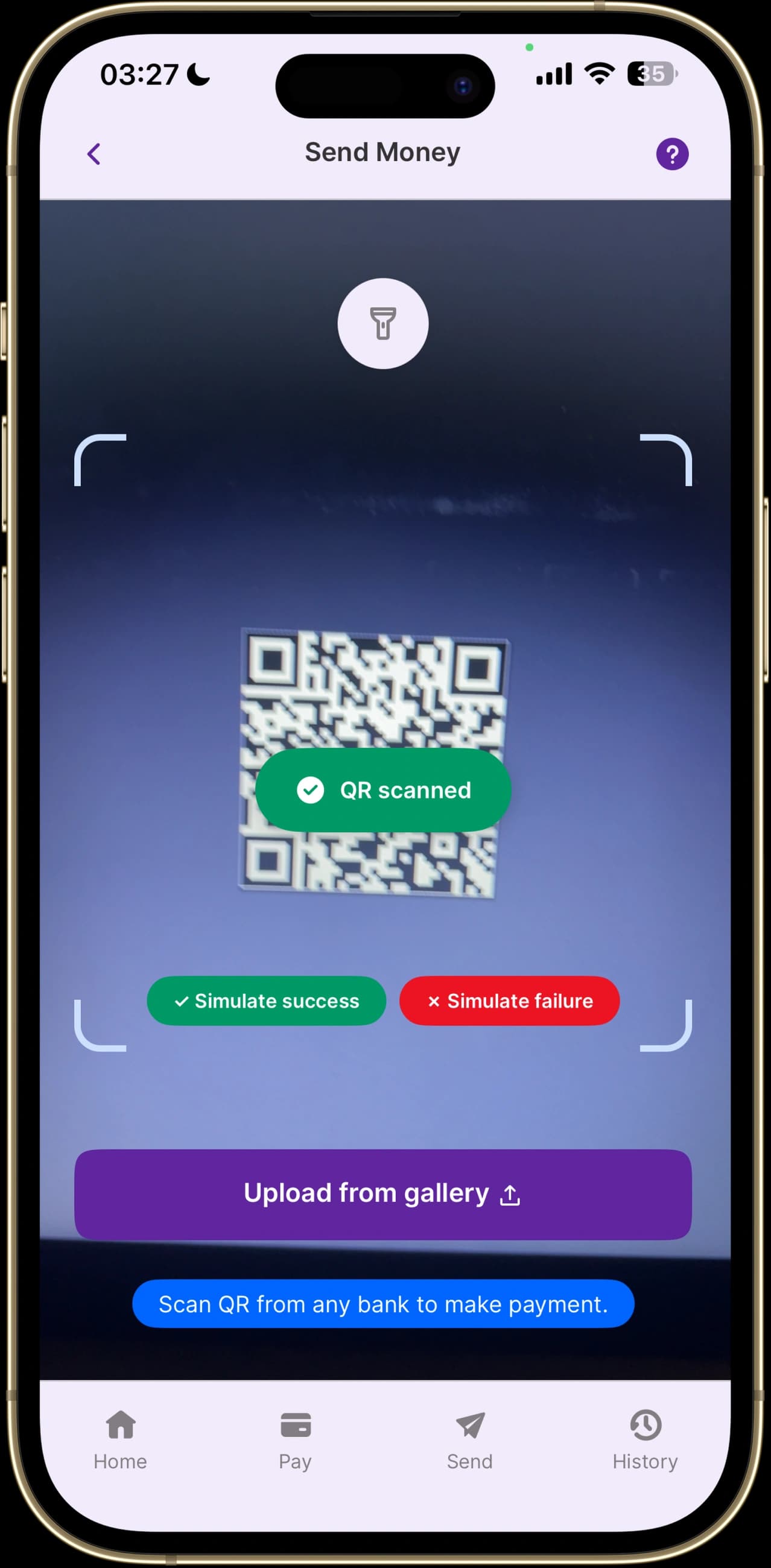
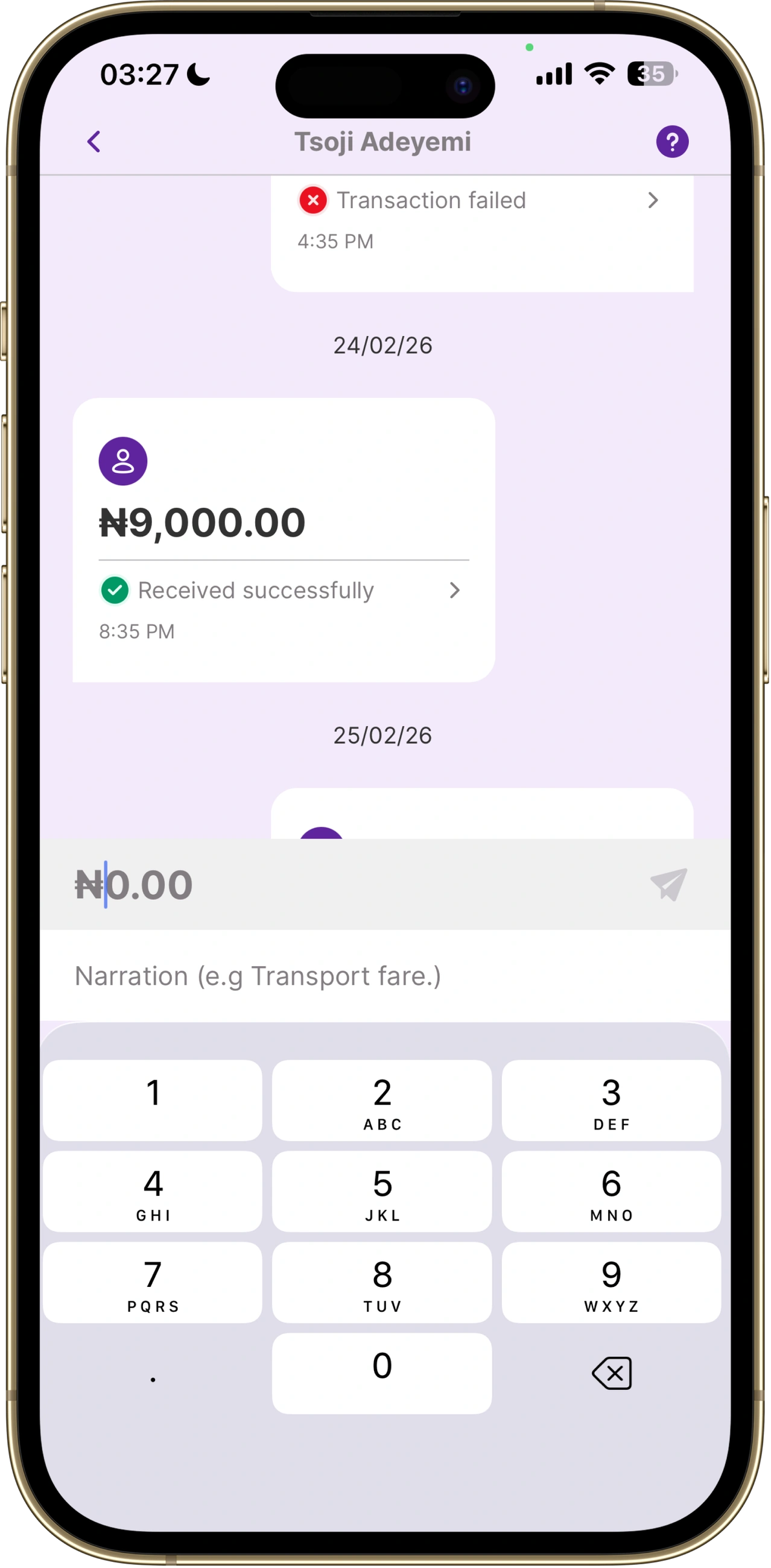
Four screens carry the whole payment loop. Each one makes a single decision, so the path from opening the app to a settled payment stays short on purpose.
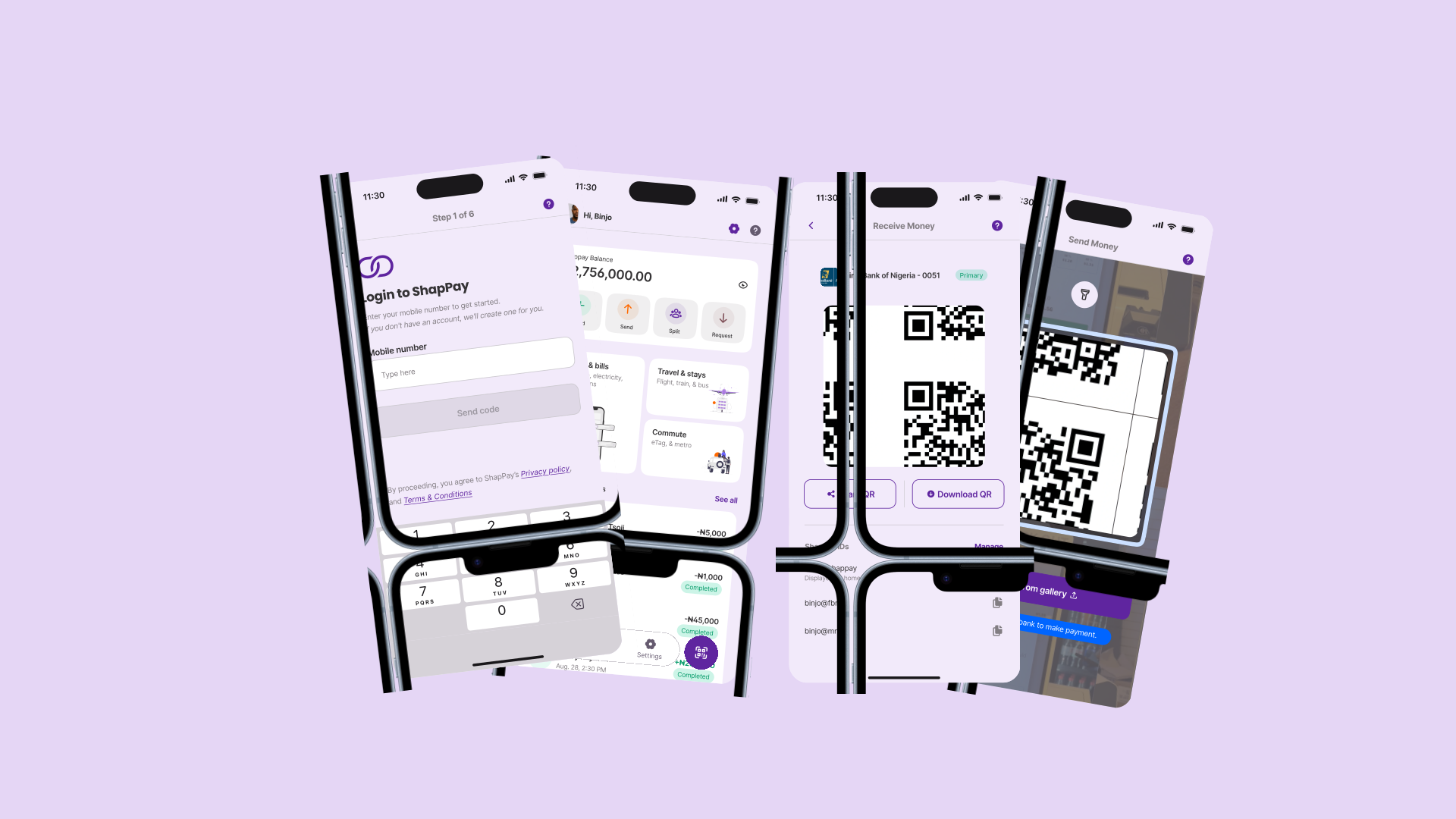
See it in motion.
A 60-second walkthrough of the core payment loop: scan, resolve, and settle. Running on the actual React Native build.

Scan → Resolve → Wallet debit → Confirmation
This is the payload, built in real time.
Every NQR code is an EMVCo TLV string: a chain of Tag · Length · Value triplets sealed with a CRC-16 checksum. In the live build this regenerates as you type; here is the engine's output for a static merchant code.
| Tag | Field | Value |
|---|
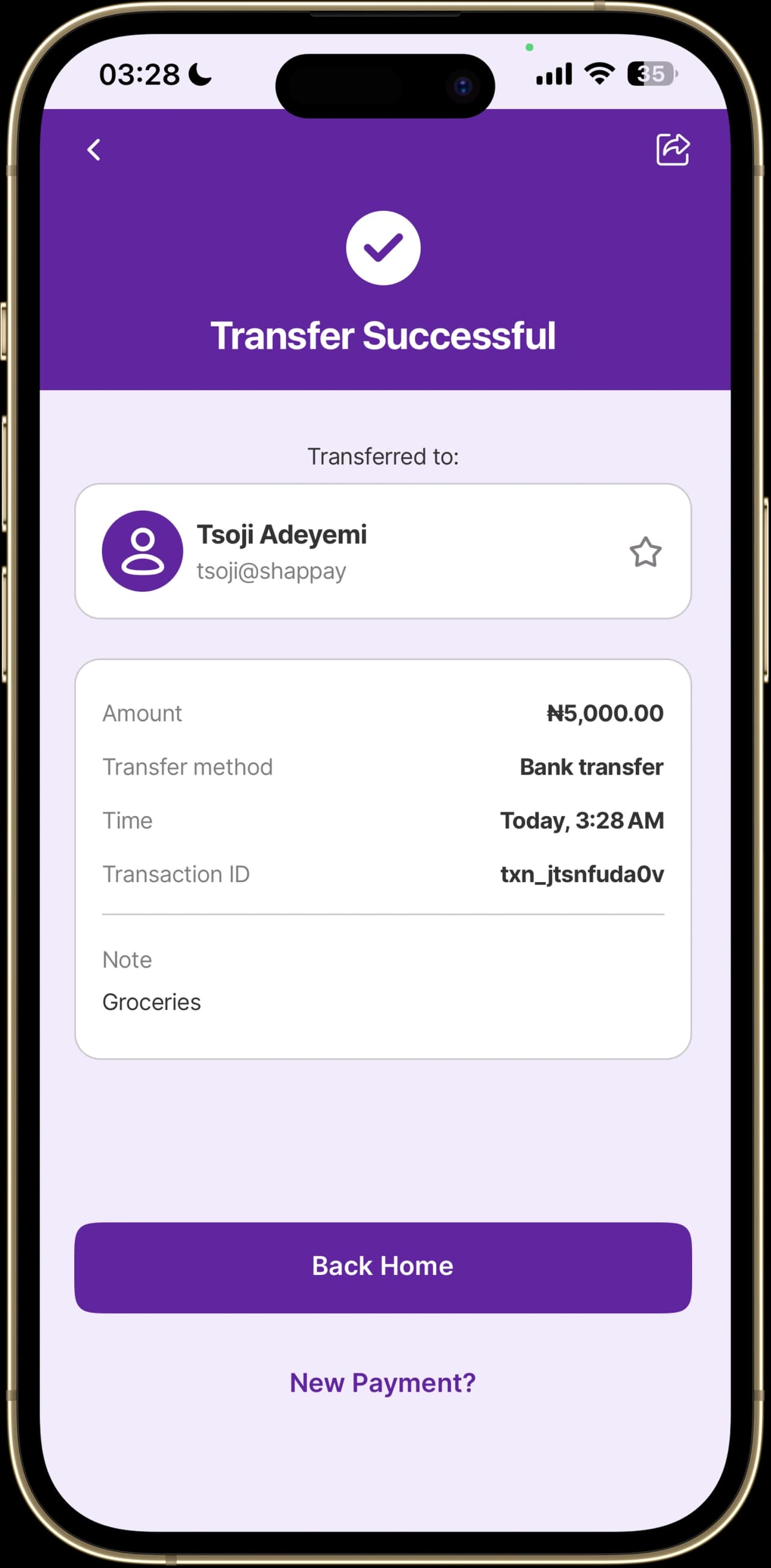
Four screens, one decision each.
The whole payment loop is short on purpose. Every screen earns its place; here is what each one is doing and why.
What good looks like, defined up front.
Quantified targets set before build; not retrofitted after. These are the numbers the product is designed around.
< 200ms
QR parsed and routing decision output before the user reads the merchant name.
> 99%
Internal Anchor ledger transfers. Near-perfect reliability by bypassing bank uptime.
< 3 seconds
PIN entry to merchant alert dispatch. The standard every design decision defers to.
> 95%
Async outbound bank payouts via Anchor. Accounted for in UX with async confirmation states.